The story of Askos Tours, of entrepreneur Emiliano Tufano and of the company's entry into the newly formed Flagship Group tells us something more than the tale of a single M&A deal. It tells us how a deeply vertical expertise, once turned into a scalable business, can become a strategic asset for an international group. And it offers some useful lessons to a great many Italian entrepreneurs.
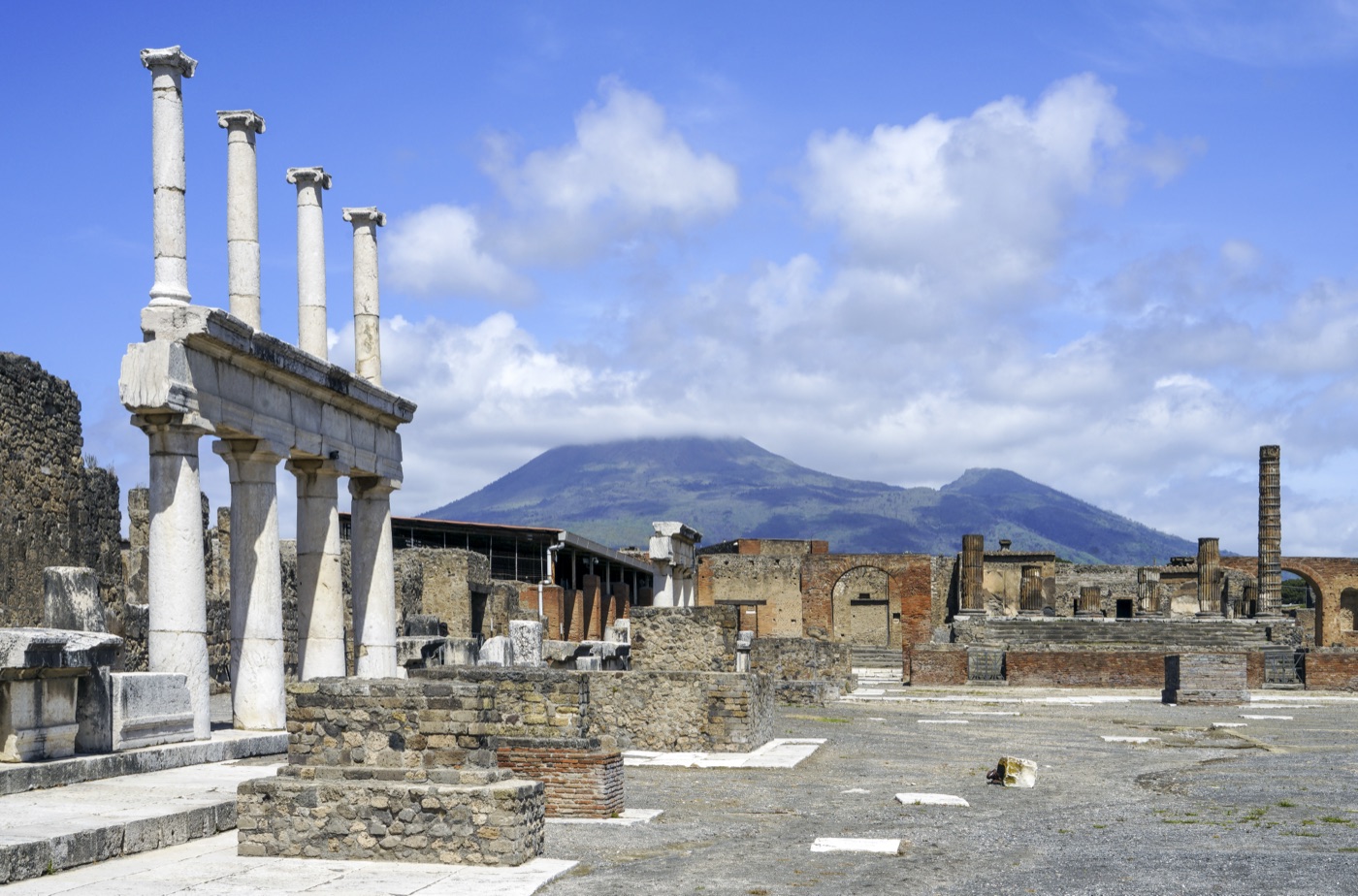
Pompeii is probably not the first place that comes to mind when the conversation turns to private equity, cross-border consolidation or M&A.
And yet Pompeii is exactly where this story begins.
In 2010 Emiliano Tufano was an archaeologist. He had worked in the field, taken part in excavation campaigns and built a deep knowledge of the archaeology and cultural heritage of the region.
At a certain point he decided to turn that knowledge into something different.
He did not set out to build a company to sell to an investor. He set out, more simply, to tell the story of Pompeii better.
That is how what would become Askos Tours was born.
The name itself comes from an archaeological object: the askos, a small vessel Tufano had found during a dig on Pantelleria. Almost a statement of intent: archaeology not as mere tourist backdrop, but as part of the company's identity.
From a small local operation, in 2016 Askos formally became a tour operator specialising in cultural and archaeological experiences. The company expanded from Campania towards Rome and other destinations in southern Italy, while holding on to one defining trait: guided visits built around specialist expertise, archaeologists, art historians and first-hand knowledge of the sites. According to figures published by the company itself, Askos went from roughly 45,000 travellers in 2019 to more than 220,000 customers in 2024.
That is substantial growth.
But the interesting point, from an investor's perspective, is not simply how much Askos grew.
It is how it grew.
From personal expertise to a business
Many entrepreneurial companies are born out of one person who happens to be exceptionally good at their craft.
The trouble starts when the business continues to be indistinguishable from that person.
An outstanding chef does not necessarily build a restaurant chain. An outstanding architect does not necessarily create an international practice. An excellent tour guide does not necessarily build a scalable tour operator.
The entrepreneurial leap consists of turning an individual competence into a system.
Product. People. Processes. Distribution. Brand. Reputation.
This, to my mind, is where the Askos story becomes interesting well beyond tourism.
Emiliano did not merely know Pompeii. That knowledge was progressively codified into experiences that other people could deliver while maintaining a recognisable standard.
The archaeologist becomes an entrepreneur.
And the archaeologist's expertise becomes a product.
It is one of the fundamental steps in building value in a founder-led business: making sure the founder remains important without the company depending entirely on him.
The value of specialisation
For many years, especially in the digital world, the watchword has been scale.
More markets. More products. More customers.
Yet a significant share of M&A activity comes out of the opposite process: companies that have become extremely good within a niche that is meaningful enough to matter.
Askos never tried to be everything to everyone.
It built a particularly strong identity in Italian cultural and archaeological tourism, starting from one of the most recognisable archaeological destinations in the world.
That specialisation may look at first like a constraint.
In practice it can become a moat.
An international buyer can acquire technology. It can invest in marketing. It can raise capital.
Far harder to recreate quickly are years of local relationships, qualified guides, knowledge of the territory, reputation, reviews, products developed and refined over time, and a corporate culture built around one particular experience.
In other words, Askos owned something that could not simply be replicated by adding capital.
And it is precisely that kind of characteristic that often makes a business strategically interesting.
Why experiential tourism is attracting capital
The Askos deal then has to be read within a broader phenomenon.
The global market for tours, activities and experiences remains extremely fragmented.
There are thousands of local operators, often founder-led, many of them with excellent products and excellent economics but insufficient size to build global infrastructure on their own.
Flagship Group was created out of exactly that thesis.
The group, backed by Shamrock Capital, initially brought together three operators: Askos Tours, WalksDevour and Amigo Tours. Flagship's leadership has stated its intention to build an international platform of leading travel experience companies while at the same time preserving local brands, management and expertise.
That is an important distinction.
This does not appear to be the classic model in which a large group buys up local operators in order to phase out their brands and create a single centralised organisation.
The stated model is closer to a house of brands.
Askos continues to be Askos.
Emiliano Tufano continues to run it.
But behind the local company now stands a platform with capital, know-how, networks and investment capacity of a different order.
Arival has also noted that Flagship is looking at further acquisitions, and that the criterion is not simply buying volume: leadership, company history, growth potential and distinctive capabilities are central to the selection.
This is particularly interesting for the Italian market.
The problem with many Italian SMEs is not quality
Italy is home to thousands of excellent companies.
The problem is rarely a lack of product.
Far more often it is the difficulty of turning entrepreneurial excellence into an asset an international investor can understand.
A company can be highly profitable and still not be ready for an M&A process.
Its accounts may be hard to read. Its corporate structure may be complex. It may depend too heavily on the founder. It may have customer concentration. It may struggle to evidence KPI and historical performance.
Or it may simply tell the story of its own value badly.
This is one of the areas on which, working with Emiliano and Askos through MOAT Investing, we concentrated a great deal of attention.
A sale process does not begin when an offer arrives.
It begins long before that.
It begins the moment you start asking what a buyer might actually want to acquire.
Why should an international group be interested in this company? What problem does it solve for them? What territory does it open up? What capability do they gain? How hard would it be to build in-house what the business has already created?
These are different questions from the simple: "How much EBITDA does it generate?"
EBITDA is fundamental.
But in the best deals it is never the whole story.
Selling a company also means choosing the buyer
There is then another common misconception.
Many entrepreneurs picture a sale process as an auction in which price is the only variable.
It is not always so.
For a founder who has spent fifteen or twenty years building a business, the counterparty matters.
It matters above all when the founder does not disappear the day after closing.
Price has to be assessed, certainly.
But so does structure. Governance. Future role. Culture. The buyer's financial firepower. Credibility. Industrial plan. Personal fit.
And what will happen to the company once the contract has been signed.
In the Askos case, joining Flagship places the company inside a group explicitly built around founder-led operators and intent on leaving each brand its own identity.
The group today brings together businesses with different capabilities and geographies, and its board includes figures with senior travel experience, among them Rod Cuthbert, founder and former CEO of Viator, and Richard Prosser, previously head of the Specialist Travel division of TUI Travel.
For an entrepreneur, the value of a transaction can therefore amount to more than the price received at closing.
It can mean monetising part of the value created while simultaneously taking part in a second phase of growth that would have been far harder to build alone.
The invisible part of a deal
When an acquisition is announced, everything looks straightforward.
A photograph. Two logos. A press release.
"Company A acquires Company B."
What you do not see are the months that came before.
The preparation. The numbers. The documentation. The discussions. The negotiations. The alternatives weighed up and then set aside.
The moments when the probability of closing looks very high, and those when it suddenly looks a great deal lower.
M&A transactions are at once financial and profoundly human.
Above all in founder-led companies.
The balance sheet belongs to the company.
But the company often represents a significant part of the entrepreneur's life.
And that is one of the reasons why advising a founder through a transaction takes something more than the ability to build a financial model.
It takes knowing when to push. When to wait. When an economic point is fundamental. And when, instead, risking a good deal over the last point of negotiation would be a mistake.
A new chapter, not necessarily the end of the story
The international press has described the deal as part of the emergence of a new global platform in experiential tourism.
Skift has spoken openly of the prospect of a fresh roll-up in the sector, noting how experiences remain one of the most fragmented segments in travel. Arival posed what is perhaps the most interesting question of all: can deeply local operators become stronger together without losing what makes them special?
That is probably Flagship's real industrial experiment.
Centralise enough to create advantages of scale.
But not so much as to destroy the authenticity that generates the value.
For Askos it means entering an entirely new phase.
For Emiliano it means watching a project begun in Pompeii become part of an international platform while retaining a role at the helm of the company.
And for those of us who had the privilege of accompanying him through this process, it is also a personal satisfaction.
At MOAT Investing we worked alongside Emiliano and Askos on the journey that led to this deal, as also reported by Il Denaro.
But the fundamental credit remains the entrepreneur's.
An advisor can help identify the moment. Can identify counterparties. Can position a company. Can help negotiate a transaction.
What an advisor cannot do is create fifteen years of execution retroactively.
That part has to be there already.
The lesson for entrepreneurs
The question I am most often asked by entrepreneurs is: "When should I start thinking about selling?"
My answer is almost always the same: long before you want to sell.
Thinking about an exit does not necessarily mean preparing to leave the company.
It means building a business that somebody else would want to own.
Those are two very different things.
A company with management, processes, brand, reporting, a diversified customer base, competitive advantages and room to grow is worth more regardless of whether it is ever sold.
And that is precisely the paradox.
The companies that are easiest to sell are often the ones the owner is under no obligation to sell.
Askos started in Pompeii. With an archaeologist. With a vessel found during a dig.
Fifteen years later, that same business has become one of the founding brands of an international group backed by institutional capital.
It is certainly an M&A story.
But, before that, it is a story about entrepreneurship.
And perhaps its most important lesson is a very simple one: you do not necessarily have to start out thinking about how big a company could become.
Sometimes you have to start out trying to become exceptionally good at something.
If the value is real, scale can come later.